
By Reviva Skin & Hair Clinic
Pigmentation usually takes months to improve, so start at least three to six months before your wedding if you can. The first step is a diagnosis, because melasma, post-acne marks and tanning respond to different treatments, and some procedures can worsen pigment. Daily sun protection is essential. A dermatologist can plan options that fit your skin and your timeline.
Who this guide is for
This guide is for brides, grooms and family members in Noida, Ghaziabad and the wider NCR who have dark patches, marks, uneven tone or tanning and want to plan treatment before the wedding. It is general education, not a diagnosis.
Why pigmentation is different in Indian skin
Indian skin types (roughly III to V) have more active pigment-producing cells, which makes them more prone to lasting darkening after sun exposure, inflammation or irritation. Strong sun, heat and pollution across the NCR can add to the problem, though they do not replace a medical assessment of the cause.
The same sensitivity means that treatments that are too strong can backfire and cause more pigmentation. Conservative, well-planned care is usually safer than aggressive treatment.
Common types of pigmentation
- Melasma: symmetrical brown or grey-brown patches, often on the cheeks, forehead or upper lip, linked to sun, hormones and genetics. It is chronic and often relapses.
- Post-inflammatory hyperpigmentation: dark marks left after acne, rashes, injuries or irritating treatments, which often fade slowly.
- Tanning and sun spots: darkening from sun exposure and flat brown spots (solar lentigines).
- Dark circles and other patterns: under-eye darkening has several causes, including pigment, thin skin and shadows, and not all of it is pigmentation.
These can look similar in a photograph but need different treatment, so a physical examination matters. A sudden change in a mole or spot should be assessed promptly.
A 3–6 month planning timeline
These are general windows. Your dermatologist will adjust them to your skin and wedding date.
5–6 months before: diagnose and start treatment
Have your pigmentation assessed. Starting early gives topical treatments time to work and leaves room for adjustments if skin reacts.
3–5 months before: build the main plan
This is the window for a treatment course, whether topical, peels or other options chosen by your dermatologist. Pigmentation improves slowly, and results are usually judged over months, not days.
1–3 months before: consolidate
Stick to treatments your skin has tolerated. Avoid new strong procedures. Keep sun protection consistent, because a few days of unprotected sun can undo progress.
Final 2–4 weeks: keep it simple
Avoid new, strong or experimental treatments. A familiar routine, sun protection and any maintenance advised by your dermatologist are usually enough.
Treatment options your dermatologist may discuss
Which of these suit you depends on the type of pigmentation, your skin and your timeline.
- Sun protection: broad-spectrum sunscreen every day, with shade and hats. Some dermatologists suggest tinted sunscreens for people with melasma, as tint may help with visible light.
- Topical lightening and corrective creams: options such as azelaic acid, vitamin C, niacinamide, retinoids or prescription lightening agents, used under supervision and for a defined period.
- Oral treatments: in selected cases, some dermatologists consider medicines for melasma, which need medical assessment and monitoring.
- Chemical peels: superficial peels chosen by strength can help some types of pigmentation, usually in a series.
- Lasers and light devices: helpful for certain spots and pigment types, but they can worsen melasma or cause rebound pigmentation if the wrong device or settings are used, so they need careful selection.
- Microneedling and combination approaches: sometimes used with topical agents, with conservative settings.
The more intensive the treatment, the longer it should be before the wedding, because redness, peeling or darkening can take time to settle.
Products and shortcuts to avoid
Be cautious with unsupervised “fairness” or lightening creams, particularly those containing hidden steroids or mercury, which can thin and damage skin. Be wary of injections or pills marketed for instant skin lightening, since evidence and safety are uncertain and results are not guaranteed. Bleach and harsh scrubs often irritate skin and can worsen pigmentation. If you are unsure about a product, ask your dermatologist before using it.
Risks and suitability
Pigmentation treatments can cause irritation, dryness, redness, peeling and, if too strong, rebound or lingering darkening, especially in Indian skin. Some ingredients are not suitable in pregnancy or breastfeeding, and some medicines make skin more sun-sensitive. Tell your dermatologist about your full history, everything you apply or take, and any previous reactions.
Downtime, safety and realistic expectations
Most topical plans involve little downtime but need patience, while peels and devices may cause redness or peeling for days. Melasma can improve but often returns with sun, heat or hormonal changes, so maintenance is usually needed. Post-acne marks usually fade gradually. No clinic can honestly promise complete clearing, identical results or instant change, and stronger treatment does not guarantee a better outcome.
Contact the clinic promptly for persistent pain, burning, blistering, pus or a sudden darkening after a treatment, rather than relying on home remedies.
Costs and individual variation
Cost depends on the diagnosis, the treatments and products used, the number of sessions, the area treated and follow-up. A topical plan differs from a course of procedures, and a friend’s results are not a reliable guide for your skin. Ask for a written estimate that separates necessary care from optional extras, and be cautious of guarantees.
Your next step: a bridal skin consultation
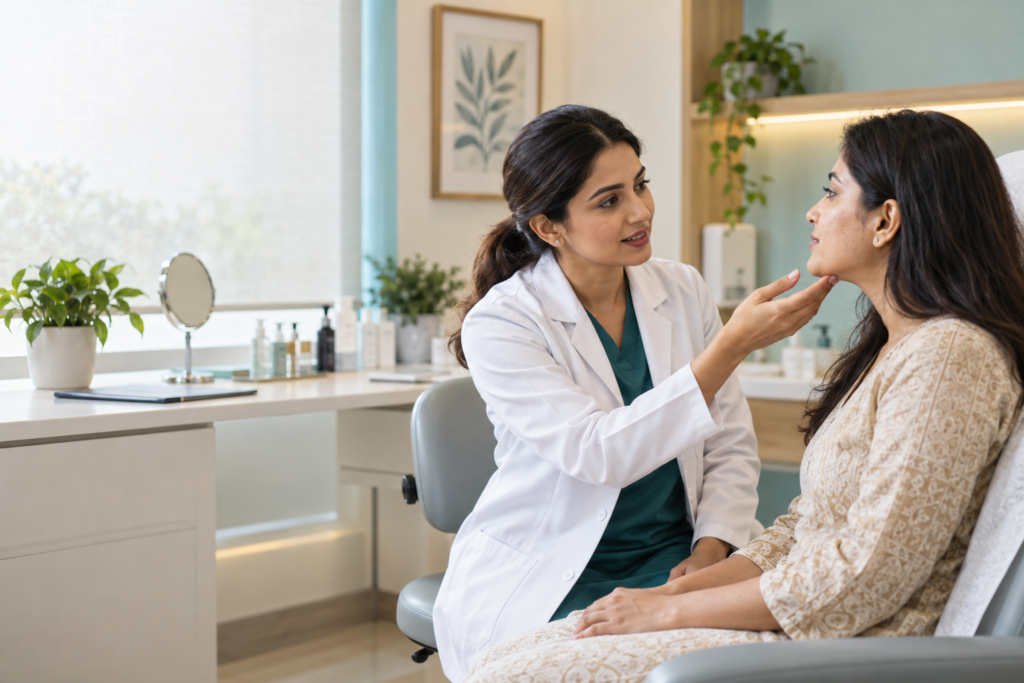
The best starting point is an assessment. At Reviva Skin & Hair Clinic, the dermatologist identifies the type of pigmentation, explains which options are safe for your skin, and builds a plan around your wedding dates. Consultations are available in Sector 76, Noida and Raj Nagar Extension, Ghaziabad. Bring your current products, prescriptions and event dates.
Book a bridal skin consultation
Frequently asked questions
When should I see a dermatologist before my wedding?
Ideally 5–6 months before, because pigmentation improves slowly. A later visit is still worthwhile, but options may be more limited and results less predictable.
Which options suit acne or pigmentation?
That depends on the cause. Active acne is usually controlled first, and pigmentation needs an accurate diagnosis because melasma, post-acne marks and tanning respond to different treatments.
How much downtime should I allow before events?
It varies. Topical plans need little, while peels and devices can cause redness or peeling for days or longer. Your dermatologist can estimate this for your treatment.
Can pigmentation be cleared completely before the wedding?
Not reliably. Some marks fade well, but melasma often persists or relapses. Aim for visible improvement and good sun protection, not guaranteed clearing.
Is laser safe for pigmentation in Indian skin?
It can be suitable for some types, but it can also worsen pigment, especially melasma, if the wrong device or settings are used. It should be planned well ahead, with a dermatologist’s advice.
Can I book a consultation in Sector 76 Noida?
Yes. Reviva Skin & Hair Clinic has a clinic in Sector 76, Noida and another at Raj Nagar Extension, Ghaziabad. Please book ahead to choose a convenient time.
Clinic locations
Noida: S No. 14 GF, Street 76 Market, Amrapali Silicon City, Gate No. 4, Sector 76, Noida.
Ghaziabad: Shop S-1, Ground Floor, Quantum Homes, Raj Nagar Extension, Ghaziabad, Uttar Pradesh 201017.
For independent patient education, see the American Academy of Dermatology patient resources.