

Skin tightening cost in Noida depends mainly on the technology used (such as HIFU or radiofrequency), the area treated, how many sessions you need, and who performs the treatment. There is no single fair price, so ask for a written estimate after an in-person assessment that lists what is included. A dermatologist can also tell you whether tightening is the right treatment at all.
Who may benefit, and who may not
Non-surgical skin tightening is usually considered for mild to moderate looseness, early jowling, a softer jawline, or fine lines with reduced firmness. It aims to improve skin quality and support, not to change facial structure.
It may not be the right choice if you have significant sagging, heavy skin folds or expectations close to a surgical lift. In those cases, energy-based treatment may disappoint, and a surgical opinion is more honest advice. Suitability also depends on medical history, skin tone, medicines and any previous fillers or implants in the area.
Why skin loosens: causes and treatment options
Skin gradually loses collagen and elastin with age. Sun exposure, smoking, weight changes, hormonal shifts and genetics speed this up. Local factors such as strong sun and pollution across the NCR can add to dullness and fine lines, although they do not replace a medical assessment.
Options range from daily sunscreen and prescription retinoids, to chemical peels and resurfacing lasers for fine lines and texture, to energy-based tightening devices for mild laxity, to injectables and surgery for specific concerns. A good plan often combines simple measures with one targeted procedure rather than stacking everything at once.
HIFU vs radiofrequency: how they differ
HIFU (high-intensity focused ultrasound)
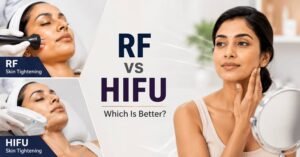
HIFU delivers focused ultrasound energy to deeper tissue layers, below the skin surface. It is often discussed for the jawline, lower face, neck and brow. Sessions are usually spaced widely apart, and results develop gradually as the body responds over weeks to months.
Radiofrequency (RF)
RF heats the dermis to stimulate collagen and tighten skin. It is commonly used for mild laxity, skin texture and fine lines, and some versions are combined with microneedling. Some people need a series of treatments, with downtime depending on the device and settings used.
Which one suits you?
Neither is universally better. HIFU generally targets deeper support, while RF tends to work on skin quality and the upper layers, though devices differ. Your dermatologist chooses based on your concern, skin type, tolerance and timeline. Beware of any clinic that promises one device fixes everything.
Risks and suitability
Common, usually temporary effects include redness, warmth, swelling and tenderness. Less common effects can include bruising, numbness or nerve-related sensations, blistering, burns or pigment change, particularly if settings are too aggressive for the skin type. Indian skin types (roughly III to V) often need conservative parameters because excess irritation can lead to post-inflammatory pigmentation.
RF devices and some other energy treatments may not suit people with pacemakers or certain metal implants, active skin infection in the area, pregnancy or poor wound healing. Share your full medical history and everything you take or apply.
Sessions, recovery and aftercare
The number of sessions depends on the device, the area and your response. Some treatments are done as a single session with review, others as a short course. Recovery ranges from almost none to several days of redness or mild swelling, depending on the treatment.
Follow your dermatologist’s aftercare instructions, protect the skin from strong sun, introduce products gradually and avoid picking or scratching. Contact the clinic if you notice worsening pain, blistering, pus or unexpected swelling.
What results and downtime are realistic?
Results build gradually over weeks to months as collagen responds, and they vary from person to person. Expect refinement and mild lifting, not the effect of surgery. Stronger settings do not guarantee proportionally better results, and no clinic can honestly promise identical or instant outcomes. Standardised photographs taken in consistent light are more reliable than daily mirror checks.
What affects the cost of skin tightening?
Skin tightening pricing varies for good reasons. The main factors are:
- Technology: the type of device, and whether it uses genuine, single-use or licensed consumables such as cartridges or tips.
- Area treated: a small area costs differently from the full face and neck.
- Treatment intensity and settings: the amount of energy delivered and how it is adjusted for your skin.
- Number of sessions: a single session versus a course, plus any maintenance.
- Practitioner expertise: who plans and performs the procedure, and how much time they spend assessing you.
- Preparation and aftercare: numbing, medicines, skincare products and follow-up visits.
- Add-on treatments: optional extras that should be separated from what you actually need.
A very low advertised price is worth questioning. It may reflect a smaller area, a shorter course, a lower-quality device or consumable, or extras that are charged separately. Ask exactly what is included, how many sessions are assumed, and what happens if you need an extra review.
Your next step: a skin tightening consultation
The most useful first step is an assessment, not a price list. At Reviva Skin & Hair Clinic, the dermatologist reviews your skin, medical history and goals, explains whether tightening suits you, and gives a clear written estimate before you decide. Consultations are available in Sector 76, Noida and Raj Nagar Extension, Ghaziabad. Bring your current products, prescriptions and questions.
Book a skin tightening consultation
Frequently asked questions
Which treatment suits fine lines and mild laxity?
It depends on the cause. Fine lines often respond to sunscreen, retinoids, peels or resurfacing, while mild laxity may suit HIFU or radiofrequency. A dermatologist can match the treatment to your skin.
How do HIFU and RF differ?
HIFU delivers focused ultrasound energy to deeper tissue, while RF heats the dermis to stimulate collagen. Both aim to tighten skin gradually, but they differ in depth, sensation, sessions and suitability.
What results and downtime are realistic?
Expect gradual, subtle to moderate improvement over weeks to months, not surgical results. Downtime ranges from minimal to several days of redness or swelling, depending on the treatment.
Why does the cost differ between clinics?
Prices differ with technology, consumables, area, number of sessions and practitioner expertise. Compare what is included, not only the headline price.
Is a package better than a single session?
Not always. A package can make sense if a course is genuinely needed, but it should follow a diagnosis, come with a written estimate, and explain what happens if your plan changes.
Where can I consult in Noida or Ghaziabad?
Reviva Skin & Hair Clinic has a clinic in Sector 76, Noida and another at Raj Nagar Extension, Ghaziabad. Please book ahead to choose a convenient time.
Clinic locations
Noida: S No. 14 GF, Street 76 Market, Amrapali Silicon City, Gate No. 4, Sector 76, Noida.
Ghaziabad: Shop S-1, Ground Floor, Quantum Homes, Raj Nagar Extension, Ghaziabad, Uttar Pradesh 201017.
For independent patient education, see the American Academy of Dermatology patient resources.




One thought on “How Much Does Skin Tightening Cost in Noida? Factors That Affect Pricing”